
Introduction
For entrepreneurs and startups, building a web application is often the first major step in turning an idea into a real, usable product. Today, web apps power everything from SaaS platforms and online marketplaces to internal tools and customer dashboards. They are no longer just “supporting technology” — in many cases, the web application is the business.
As competition increases and users expect fast, reliable, and intuitive digital experiences, the quality of your web application becomes critical. A well-built web app can help you launch faster, attract early adopters, and scale smoothly as your user base grows. On the other hand, poor development decisions can lead to performance issues, security risks, and costly rebuilds that slow momentum.
This is why choosing the right development partner matters. With so many web app development companies available globally, founders are often overwhelmed by choices that look similar on the surface but differ significantly in execution, communication, and long-term value.
This guide is designed specifically for entrepreneurs and startup teams who want clarity. It explores what web app development really involves, why custom-built solutions matter, how to evaluate development partners, and which global companies are worth considering in 2026. The goal is not to promote hype, but to help you make informed, confident decisions as you build and scale your product.
What Is Web App Development?
Web app development is the process of creating interactive applications that run in a web browser, allowing users to perform tasks, submit data, and interact with information in real time. Unlike traditional websites, which primarily display static content, web applications are functional products — they process information, manage workflows, and often serve as the primary interface for a business’s services.
At its core, web app development involves multiple layers of technology:
- Frontend: The part users interact with, including design, layout, and responsiveness.
- Backend: The server-side logic that processes data, handles requests, and manages databases.
- Database: Where all the application data is securely stored and retrieved.
- APIs (Application Programming Interfaces): Enable integration with other software, payment gateways, analytics tools, or external services.
Startups rely on web applications for many purposes: launching a SaaS product, building an e-commerce platform, creating customer portals, or developing internal dashboards. A successful web app balances functionality, performance, and user experience while being scalable for future growth.
The choice of a development partner is crucial. Working with experienced web app development companies ensures that the architecture is robust, the code is maintainable, and the solution can evolve as the business grows. This is why many startups prefer custom web app development companies that focus on tailored solutions rather than off-the-shelf templates — these partners understand that each startup has unique requirements and constraints.
For startups, a web application is not just a product feature — it’s often the product itself. Building it correctly from the beginning lays the foundation for user satisfaction, operational efficiency, and long-term scalability. Choosing the right approach and the right team can be the difference between rapid growth and costly technical debt.
Why Web Applications Are Ideal for Entrepreneurs and Startups
For entrepreneurs and startup teams, web applications are often the most practical and strategic choice when launching a new product.
Unlike static websites or mobile-only solutions, web apps provide the flexibility, scalability, and accessibility that startups need to test ideas, attract early users, and grow efficiently.
1. Faster Time to Market
Web apps can be developed and launched more quickly than native mobile applications because they do not require separate builds for iOS, Android, and desktop environments. Startups can release a minimum viable product (MVP) faster, gather user feedback, and iterate without significant delays. This speed is essential for validating business ideas in competitive markets.
2. Cost Efficiency
Developing a single web application that works across multiple platforms reduces upfront costs. Startups avoid paying for multiple native apps while still reaching a broad audience. Furthermore, updates and maintenance can be handled centrally, saving both time and resources over the long term.
3. Cross-Device Accessibility
Users can access web applications from desktops, laptops, tablets, or smartphones without needing to download additional software. This broad accessibility increases potential reach and user engagement, which is particularly important for startups aiming to attract early adopters globally.
4. Scalability and Flexibility
Web applications are built with scalability in mind, allowing features, users, and data to grow without requiring complete rewrites. Whether a startup begins with a small MVP or expects rapid growth, a well-structured web app provides the technical foundation for expansion.
5. Integration Capabilities
Modern startups rely on multiple tools for payment processing, analytics, CRM, and other business functions. Web apps can integrate easily with these services via APIs, enabling automated workflows and seamless data exchange.
Startups that partner with experienced web app development companies gain the advantage of tailored, efficient, and scalable solutions. Many founders specifically seek custom web app development companies because these providers craft solutions aligned with business goals rather than offering generic templates. Custom-built web apps ensure long-term adaptability, better performance, and an improved user experience.
In conclusion, web applications combine speed, cost efficiency, scalability, and accessibility, making them a smart investment for startups. By leveraging a strong development partner, entrepreneurs can focus on growth and strategy while their web app forms the foundation for long-term success.
Risks of Choosing the Wrong Web App Development Company
Selecting the wrong development partner can be one of the most costly mistakes a startup can make. While founders often focus on speed or cost, hiring a team that lacks experience or understanding of startup needs can lead to technical debt, delays, and even product failure.
Understanding these risks helps entrepreneurs make informed decisions when evaluating web app development companies.
1. Poorly Structured Code
A development company that prioritizes rapid delivery over quality can produce code that is difficult to maintain or scale. Poor architecture may slow future feature additions, increase bugs, and make the app vulnerable to crashes as user demand grows.
2. Security Vulnerabilities
Web applications often handle sensitive user data, including personal information, payment details, or business-critical data. An inexperienced team may overlook essential security practices, leaving your startup exposed to data breaches, compliance issues, or reputational damage.
3. Limited Scalability
Startups often aim for rapid growth. If a web application is not built with scalability in mind, it can fail under increased traffic, require expensive rewrites, or prevent the addition of new features. This limits the startup’s ability to scale and compete effectively.
4. Budget Overruns
Choosing the wrong partner can result in hidden costs. Projects may exceed initial estimates due to poor planning, inefficient workflows, or unforeseen technical issues. Startups with limited funding can find themselves in a difficult financial situation when costs escalate unexpectedly.
5. Delayed Timelines and Poor Communication
A partner that fails to communicate effectively can cause missed deadlines, misaligned expectations, and frustration. Startups need a transparent, responsive team that can provide realistic timelines and keep stakeholders informed throughout development.
6. Rebuild Costs
The cumulative effect of these issues often forces startups to rebuild their web application entirely, wasting time, money, and resources. The cost of correcting mistakes typically far exceeds the investment in choosing the right partner from the start.
Entrepreneurs can avoid these risks by carefully evaluating web app development companies, reviewing past projects, and ensuring the team understands startup dynamics. Choosing a skilled, experienced partner lays the foundation for a secure, scalable, and successful web application.
What Makes a Great Web App Development Company
Choosing the right development partner is crucial for startups and entrepreneurs. A high-quality web app development company not only delivers functional code but also provides strategic guidance that aligns with your business goals. Understanding what separates a strong development company from an average one can help startups make informed decisions.
1. Startup Awareness and Business Understanding
A great development company understands the unique challenges startups face, including limited budgets, fast timelines, and the need for early validation. They ask questions about your target audience, business model, and growth plans before starting development. This ensures that technical decisions support business objectives rather than just fulfilling requirements.
2. Custom Development Approach
The best companies avoid cookie-cutter templates and focus on building solutions tailored to the startup’s specific needs. Custom web app development companies provide flexible architectures, scalable databases, and modular code, allowing startups to iterate quickly without creating technical debt.
3. Strong UI/UX Expertise
User experience is critical for adoption and retention. A great development company integrates UX designers with the development team to create intuitive interfaces, seamless navigation, and responsive layouts that work across devices. For startups, delivering a polished, user-friendly web app can make the difference between success and failure in early markets.
4. Scalable and Maintainable Architecture
Startups need web applications that grow with their user base. A high-quality development partner designs systems that are secure, scalable, and easy to maintain. This approach reduces future rebuilds and ensures the application can adapt as new features are added.
5. Transparent Communication and Collaboration
Effective communication prevents misunderstandings and delays. Top companies provide clear project timelines, status updates, and open channels for feedback. Startups benefit from teams that offer proactive guidance and are responsive to questions.
6. Post-Launch Support
Building the app is only the beginning. Good web app development companies offer ongoing maintenance, updates, and technical support to address bugs, implement improvements, and ensure optimal performance as the startup grows.
By evaluating development partners against these criteria, entrepreneurs can identify companies that not only deliver working applications but also serve as strategic collaborators. This ensures the startup receives a secure, scalable, and user-focused product that supports long-term business growth.
How We Evaluated Web App Development Companies
With so many development firms available globally, choosing the right partner can be overwhelming. To provide clarity, this guide evaluates web app development companies based on practical criteria that matter most to startups and entrepreneurs.
1. Technical Expertise
A top-tier company demonstrates strong skills across frontend, backend, and cloud technologies. They should be proficient in modern frameworks, responsive design, database management, and API integrations. Technical proficiency ensures your web application is fast, secure, and scalable.
2. Startup Experience
Startups face unique challenges, including limited budgets, tight timelines, and evolving requirements. Companies with proven experience supporting early-stage businesses understand how to balance cost, speed, and quality, making them ideal partners for entrepreneurs.
3. Custom Development Approach
Generic templates rarely meet the needs of growing startups. We prioritized companies that specialize in custom web app development, creating solutions tailored to the client’s business goals rather than one-size-fits-all designs.
4. Design and User Experience
A functional app is only valuable if users can navigate it easily. Strong web app development companies integrate UI/UX design into the development process, ensuring the product is intuitive and engaging.
5. Long-Term Support
Maintenance, updates, and scalability are critical for any startup’s growth. We considered companies that provide ongoing technical support to ensure web apps remain secure, fast, and adaptable as requirements evolve.
By using these criteria, entrepreneurs can focus on partners who deliver not just code, but long-term business value, reliability, and strategic guidance.
Top Web App Development Companies to Consider Globally
When startups and entrepreneurs search for the right development partner, choosing a reliable, experienced company can define the success of their web application. The following eight web app development companies are recognized globally for delivering scalable, secure, and business-focused web applications. Each has strengths that cater to startups looking to build robust products efficiently.
1. Silver WebBuzz
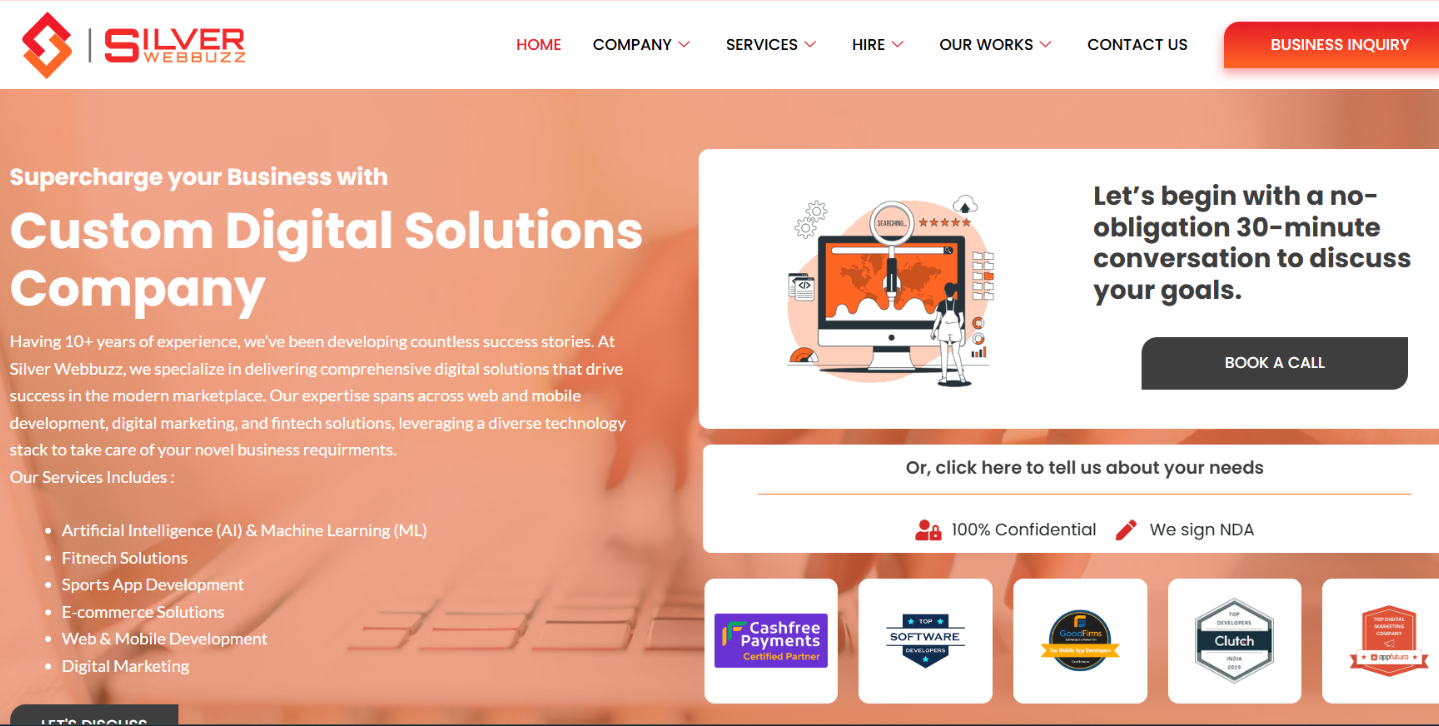
Silver WebBuzz is a full-service digital and web solutions company with over 10 years of experience delivering custom web app development solutions for startups and growing businesses. They specialize in building scalable web applications, including SaaS platforms, e-commerce systems, and CMS-based apps. Their team focuses on combining functional design with user-centric UI/UX to create applications that are both intuitive and high-performing. Silver WebBuzz also integrates APIs, third-party tools, and cloud services to ensure operational efficiency. Entrepreneurs value their transparent communication, collaborative approach, and long-term support model, which helps startups manage ongoing updates and scalability challenges. With experience across multiple industries, Silver WebBuzz offers tailored web app solutions that balance speed, quality, and adaptability, making them a strong choice for startups aiming for growth and product-market fit.
2. Uptech

Uptech takes a product-first approach, working closely with founders during discovery and MVP development. They prioritize UX design, ensuring that the application is intuitive and engaging for early users. Uptech specializes in SaaS platforms, marketplaces, and digital tools, making them a suitable partner for startups seeking to validate their ideas quickly. Their agile process allows iterative releases, giving startups the flexibility to adapt features based on user feedback. With a focus on scalability and modular architecture, Uptech ensures that applications can grow as the startup expands. Many entrepreneurs turn to Uptech for their collaborative approach, which combines design thinking, technical excellence, and strategic product guidance.
3. Biz4Group
Biz4Group offers custom web development services for startups and small businesses. They focus on scalable solutions, particularly for SaaS products, marketplaces, and enterprise web applications. Biz4Group’s development process emphasizes modularity and long-term maintainability, which reduces technical debt as startups expand. Their team also integrates third-party APIs, payment gateways, and analytics tools, helping businesses automate workflows and collect valuable insights. Startups often choose Biz4Group for their ability to balance cost, speed, and quality. By combining technical expertise with business-focused consultation, Biz4Group helps startups transform ideas into functional web applications that are ready to scale and evolve over time.
4. SoftKraft
SoftKraft specializes in cloud-native web applications and high-performance backend systems. Their team excels at building applications that handle large volumes of data and maintain fast response times even under heavy user loads. For startups expecting rapid growth, SoftKraft provides architectures designed for scalability, security, and reliability. They work across industries including SaaS, fintech, and enterprise tools, adapting their development approach to meet each client’s unique requirements. By integrating modern technologies, responsive design, and APIs, SoftKraft ensures that applications are functional, adaptable, and future-ready. Their focus on technical excellence makes them an ideal choice for startups seeking a partner capable of building complex, high-performance web apps.
5. Code Brew Labs
Code Brew Labs delivers end-to-end web application development, covering both frontend and backend solutions. They specialize in building scalable digital products for startups, with a focus on rapid MVP launches and iterative development. Their teams are experienced in SaaS platforms, marketplaces, and custom workflow applications. By combining clean coding practices, modular architecture, and responsive UI/UX design, Code Brew Labs ensures that applications are both reliable and user-friendly. They also support API integrations, third-party tool connections, and cloud-based solutions, helping startups achieve operational efficiency. Many startups turn to Code Brew Labs for their ability to balance speed, quality, and cost, making them a dependable option for early-stage companies looking for long-term scalability.
6. Master of Code Global
Master of Code Global specializes in building complex web platforms for startups and enterprises alike. Their team focuses on automation, high-performance backend systems, and custom workflows, making them ideal for startups that require technical precision and scalability. Master of Code Global also integrates analytics and data-driven features, ensuring that businesses can make informed decisions based on user behavior. They follow agile development practices, allowing early-stage companies to iterate rapidly and test features without excessive delays. For startups looking for a partner capable of handling both frontend elegance and backend complexity, Master of Code Global offers a balanced, reliable solution.
7. LeewayHertz
LeewayHertz develops custom web and SaaS applications for startups and enterprises. Their focus is on secure, data-intensive platforms, particularly for industries like fintech, healthcare, and logistics. They emphasize modular architectures that allow for rapid iteration and long-term scalability. LeewayHertz integrates APIs, analytics, and automation tools to streamline business processes and enhance user engagement. Their development approach combines technical depth with design-oriented thinking, resulting in web applications that are reliable, intuitive, and performance-optimized. Startups often choose LeewayHertz for their ability to transform complex business ideas into functional web applications quickly, while maintaining maintainability and growth potential.
8. Accenture
Accenture is a global technology services provider that delivers large-scale web platforms and enterprise-grade web applications. While primarily serving enterprise clients, startups with complex requirements or long-term scaling plans may benefit from their expertise. Accenture excels in compliance-heavy industries, multi-system integrations, and high-performance digital platforms. Their teams offer end-to-end support, from product strategy and design to development, testing, and maintenance. Startups looking for structured processes, secure architectures, and robust performance may consider Accenture when planning for future growth. Their focus on technology innovation, global best practices, and enterprise-level scalability ensures that applications can handle rapid user growth, complex workflows, and evolving business needs.
Web App Development Trends Startups Should Watch in 2026
The web app development landscape is evolving rapidly. For startups and entrepreneurs, understanding emerging trends is crucial for building products that remain competitive, scalable, and user-friendly. By aligning development strategies with current trends, startups can make informed decisions and partner effectively with custom web app development companies to deliver modern, future-ready applications.
1. Progressive Web Apps (PWAs)
PWAs are bridging the gap between web and mobile experiences. They load quickly, work offline, and provide app-like functionality within a browser. For startups, PWAs offer faster development cycles compared to native apps, lower costs, and broad accessibility without requiring separate mobile applications.
2. Cloud-Native Development
Cloud infrastructure enables startups to scale efficiently while controlling costs. Cloud-native web apps are more flexible, resilient, and easier to maintain. Leveraging cloud services for storage, hosting, and computation allows startups to focus on product features rather than infrastructure management.
3. API-First Architecture
Modern startups increasingly rely on API-driven development. An API-first approach allows web applications to integrate seamlessly with third-party services, including payment gateways, analytics, CRMs, and AI solutions. This modular approach accelerates development, improves interoperability, and simplifies updates.
4. AI-Enhanced Web Applications
Artificial intelligence is becoming a standard feature in web apps. Startups are embedding AI-powered recommendations, chatbots, automation, and analytics directly into applications, enhancing user experience and business intelligence without extensive manual processes.
5. Security-First Development
Data security and compliance are no longer optional. Startups must prioritize authentication, encryption, and secure coding practices from the start. Security-first design reduces the risk of breaches, protects users, and builds trust in the product.
By staying aware of these trends, entrepreneurs can collaborate with experienced custom web app development companies to build products that are scalable, innovative, and aligned with market expectations. Integrating these strategies early ensures the web app remains competitive as technology and user demands evolve.
How Startups Should Choose the Right Web App Development Partner
Selecting the right web app development company can determine whether a startup succeeds or struggles. A strong partner not only writes clean code but also helps define technical strategy, aligns with business goals, and supports growth. Entrepreneurs should consider several critical factors before making a decision.
1. Define Clear Goals
Startups must clarify what they want to achieve with their web application. Are you building a minimum viable product (MVP), a full-scale SaaS platform, or an internal tool? Clear objectives allow potential partners to propose solutions that match your business needs and timelines, avoiding unnecessary complexity or overspending.
2. Review Portfolios and Case Studies
Examining a company’s previous work reveals their capabilities, technical expertise, and design quality. Focus on projects similar in scope or industry to your startup. Case studies that detail the problem, solution, and outcomes demonstrate the company’s ability to deliver measurable results.
3. Evaluate Technical Expertise
The best web app development partners have strong knowledge of modern frameworks, cloud technologies, API integration, and security protocols. They should be capable of building scalable, maintainable, and performant applications that evolve with your startup’s growth.
4. Prioritize Communication and Collaboration
Transparent and consistent communication is vital for startups, especially when working with remote or international teams. The right company provides regular updates, proactive problem-solving, and open channels for feedback, ensuring that expectations remain aligned throughout development.
5. Focus on Long-Term Support
Web app development doesn’t end at launch. Startups need partners who offer post-launch support, maintenance, and scalability planning. Ongoing guidance ensures the application adapts to user feedback, market demands, and technical updates without compromising performance or security.
6. Consider Customization and Flexibility
Startups often require solutions tailored to their unique processes. A reputable development partner, particularly custom web app development companies, delivers flexible architectures and modular designs, allowing startups to iterate quickly and respond to changing business needs.
By evaluating potential partners on these criteria, entrepreneurs can select a web app development company that serves not just as a technical provider, but as a strategic collaborator. This ensures that the startup receives a secure, scalable, and user-centric application that supports long-term success.
Common Mistakes Startups Make When Hiring Web App Developers
Many startups underestimate how critical the choice of a development partner is. Even with a solid idea, selecting the wrong team can lead to delays, cost overruns, and poor user experiences. Understanding common mistakes helps entrepreneurs avoid pitfalls when working with custom web app development companies.
1. Choosing Based Solely on Price
While cost is important, the cheapest option often comes with trade-offs: lower quality code, inexperienced developers, or lack of post-launch support. Startups should balance cost with experience, reliability, and long-term value.
2. Skipping Discovery and Planning
Rushing into development without clear requirements or product strategy often leads to misaligned features and inefficient workflows. A proper discovery phase helps define goals, user needs, and technical requirements, reducing risks later.
3. Overloading the MVP with Features
Startups sometimes attempt to launch a fully-featured application immediately. This can delay the release, increase complexity, and make future iterations harder. Focusing on essential features first allows quicker user feedback and iterative improvement.
4. Ignoring User Experience
A web app may function technically but still fail if it is confusing or unintuitive. Neglecting UI/UX design can result in poor adoption and high churn. Startups must ensure their development partner prioritizes user-centered design.
5. Not Planning for Maintenance and Scaling
Some startups only consider the initial build, ignoring long-term updates, scalability, and security. Choosing a partner who offers ongoing support ensures the application grows with the business and adapts to evolving requirements.
By avoiding these mistakes and partnering with experienced custom web app development companies, entrepreneurs can reduce risk, save time, and build web applications that scale efficiently while providing excellent user experiences.
Web App Development vs Mobile App Development for Startups
Startups often face a critical decision: should they launch a web application, a native mobile app, or both? Understanding the differences helps entrepreneurs allocate resources effectively and choose the right development strategy.
Web Applications
Web apps run in a browser, making them accessible across desktops, tablets, and mobile devices without requiring downloads. They are generally faster and more cost-effective to develop, especially for startups with limited budgets. Web apps are ideal for MVPs, SaaS products, e-commerce dashboards, or customer portals, where accessibility and rapid iteration are key. Experienced web app development companies focus on building scalable, responsive applications that can evolve with the business.
Mobile Applications
Native mobile apps provide optimized performance and access to device-specific features like cameras, sensors, or push notifications. However, they require separate development for iOS and Android, increasing costs and timelines. Mobile apps are often considered after validating the product-market fit with a web app or when specific mobile functionality is essential.
Choosing the Right Approach
Many startups begin with a web app to quickly test the market and gather user feedback. Once the product gains traction, a mobile app can be introduced to enhance user experience and leverage device capabilities. By starting with a web application, entrepreneurs reduce initial investment, maintain flexibility, and partner effectively with skilled web app development companies to create a foundation that scales seamlessly.
Final Thoughts
For entrepreneurs and startups, building a web application is more than a technical project — it is a strategic investment that can define the future of the business. A well-designed, scalable, and user-friendly web app serves as the backbone of growth, customer engagement, and operational efficiency. Choosing the right development partner is therefore critical.
The web app development companies highlighted in this guide represent a range of expertise, from MVP-focused teams to enterprise-scale solution providers. Each company brings unique strengths, whether it is rapid product iteration, scalable architecture, advanced integrations, or intuitive UI/UX design. Startups benefit most when selecting a partner who understands their vision, communicates clearly, and supports growth beyond the initial launch.
Working with experienced custom web app development companies ensures that your product is tailored to your business needs, built with maintainable code, and ready to evolve as your startup scales. A reliable partner can reduce technical risk, shorten time-to-market, and deliver an application that engages users effectively.
In conclusion, investing time to evaluate development partners carefully is essential for long-term success. By combining strategic planning, modern technology, and expert guidance, startups can create web applications that not only function well but also drive growth, innovation, and sustainable business value.